
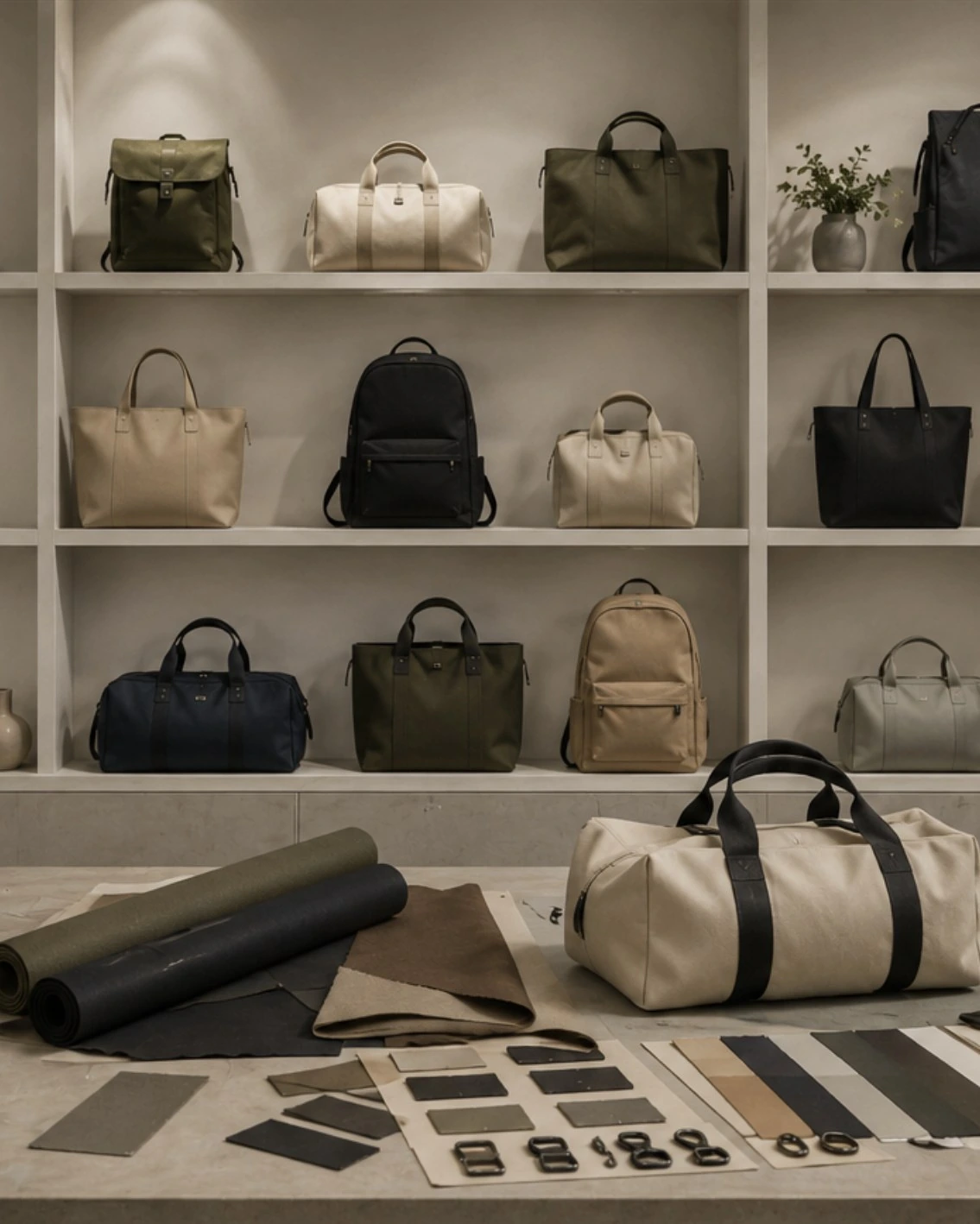
Build on the brand you already have
Adding bags to an established fashion collection is a category decision, not a new-business starting exercise. Your brand already has customers, sales channels and a point of view. The opportunity is to offer a product that fits those relationships, whether as an everyday accessory, a travel item or a useful addition to an existing apparel range.
Start with how the bag will be sold and used. A piece intended for your own webshop may need a different brief from one planned for wholesale buyers or a seasonal capsule. Define the commercial role, intended positioning, quantity range and delivery window before choosing detailed construction options.
Choose a category your customers can understand
The first bag should have a clear connection to your current collection. Consider the way your customers dress, commute, travel or use your products. A familiar use case gives the team a stronger basis for evaluating size, carrying function and visual direction than an isolated trend image.
Review relevant sample work to discuss the kind of product you mean. Use references to communicate direction, not to request another brand's exact design. If your priority is a useful branded bag with limited changes, an established base style may be worth assessing before commissioning a new structure.
A dedicated bag partner can coordinate the production side
You do not necessarily need to recruit a separate internal sourcing team or build every supplier relationship yourself. A dedicated bag production partner can help organise product review, sampling, factory communication, production follow-up and shipping around a confirmed brief.
Your team still owns product positioning, brand decisions, commercial approvals and the final sample review. Clear responsibilities matter more than handing over a vague concept. ProtoBag Studio provides a Munich contact for coordination with our China-side production team; that arrangement should not be confused with manufacturing in Germany.
Keep the initial development scope commercially focused
Bring the strongest product references, the intended use and the elements of your brand identity the bag should express. A prepared Tech Pack is useful, but the first conversation can start with a clear direction and available product information. Identify the essentials before discussing optional changes.
Materials, colours, branding and selected structural details can be reviewed for the project. Their feasibility depends on product structure, material availability and production requirements. Our stock versus custom materials guide explains one of the decisions that can affect lead time and development commitments.
Connect sampling to your collection calendar
A physical sample allows your team to evaluate the product alongside existing garments, accessories and packaging. Check whether its scale, handling and finish support the intended positioning. Record feedback together and approve a clear version before progressing into production planning.
For a European launch, plan backwards from the date goods must be ready for sale. Allow for review, material decisions, production and transport rather than assuming the factory completion date is the launch date. MOQ depends on the product, materials, customisation and production requirements; discuss it against your planned scope.
If the bag will enter retail systems, check product identification requirements with your channel. GS1 explains how GTINs identify trade items. This is a practical planning reference, not a claim that every bag needs the same labelling setup.
Bring your category direction to the first discussion
ProtoBag Studio can support the production side while your team focuses on branding, marketing and sales. Share your existing brand, customer profile, intended bag category, available references, quantity range and required launch window. These details help us assess the next useful step.
Read about our development and production services, explore Base Styles for selected branding projects, or send your collection brief. For a company merchandise programme rather than a retail range, see our guide to branded bags for companies.