
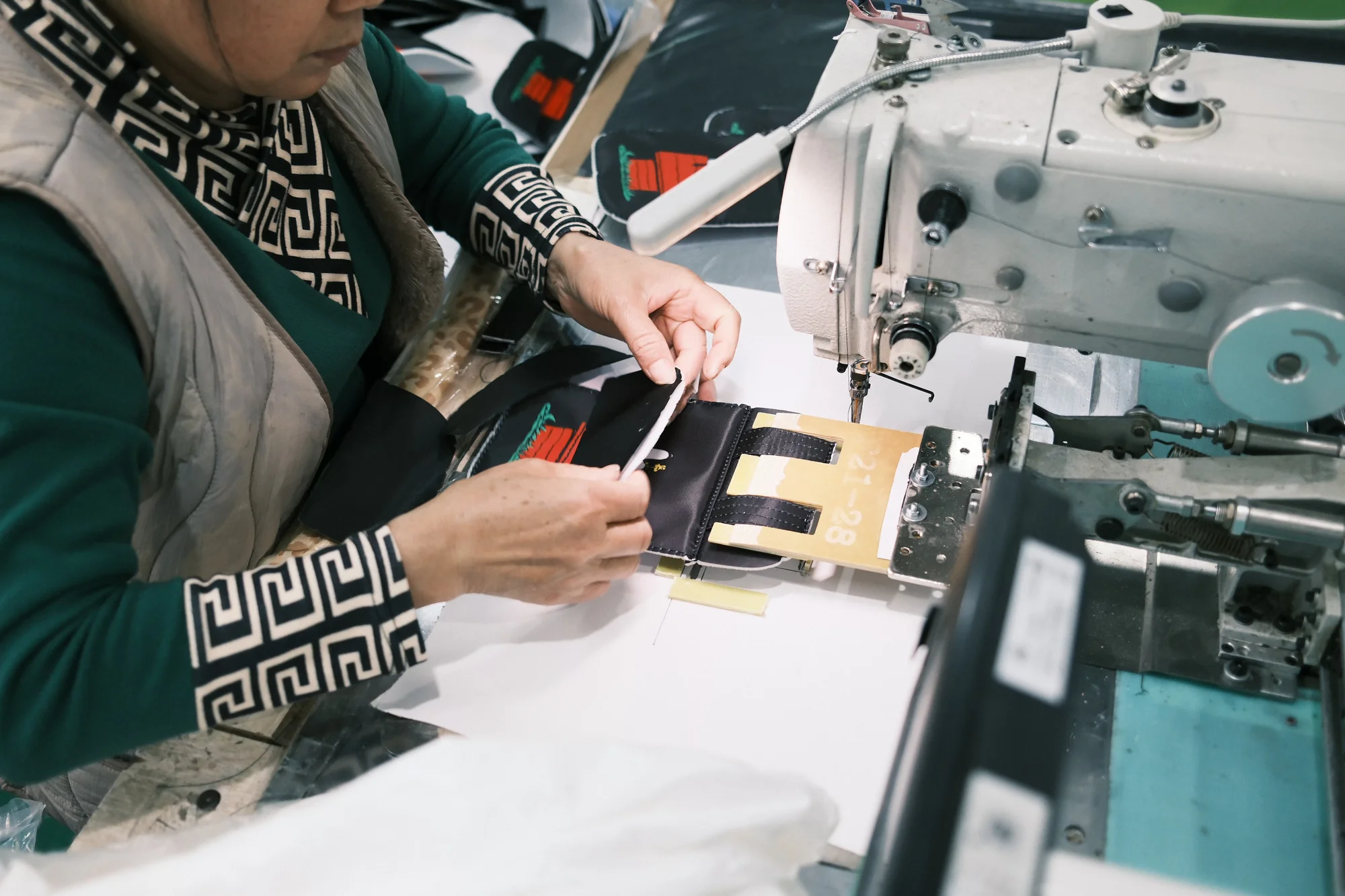
Start with the purpose of the bag
Custom branded bags can support employee gifts, client gifting, trade shows, events and corporate merchandise programmes. The useful starting point is what the bag needs to do. A bag handed out at an exhibition has a different role from an item employees will carry regularly or a product sold through a company merchandise store.
Define the users, intended contents, quantity range, brand identity and required arrival date. This gives the project a commercial brief before anyone chooses detailed materials or construction. A visible logo is only one part of the result; the bag also needs to suit its purpose and feel appropriate for your company.
Consider a base style before developing from scratch
A company does not always need a completely new bag structure. Starting from an established format can reduce development work and avoid reopening every design decision. It may offer a shorter development route and lower development cost than an equivalent project built from scratch, depending on the changes and availability.
Browse our Base Styles for branded bags to identify a relevant starting point. This is a product discussion rather than an off-the-shelf stock or delivery promise. Availability, branding suitability, colours and production requirements are confirmed for the enquiry. We adapt a suitable format for the project rather than promise to copy another product exactly.
Set a clear boundary for branding and adjustments
Your logo, colour direction and intended use help establish the brief. Depending on the bag, materials, colours, branding and selected product details can be reviewed. The options depend on the structure, materials, project scope and production feasibility.
A useful boundary is whether the existing format already does the required job. If the request changes the core construction or introduces a substantially different function, it may require custom development. Discuss the desired outcome first; do not assume that every feature shown in separate reference images can be combined within one base-style project.
Approve a physical sample before the production decision
A physical sample allows your team to review the overall bag, logo presentation, usability and workmanship together. Identify the person responsible for consolidating feedback so that marketing, procurement and the end user are working towards one approved version.
Confirm which details the sample represents and record any outstanding production decisions. If a material or component changes afterwards, its impact should be reviewed before it is treated as equivalent. Our sampling and production services explain how ProtoBag Studio can coordinate these stages, while sample work shows relevant product formats.
Plan around the delivery date and confirmed scope
For an event or employee programme, distinguish the date bags must arrive from the date production is expected to finish. Artwork preparation, sample review, material availability, production, agreed checks and transport all affect the schedule. Tell us early if the event date cannot move.
MOQ depends on the product, materials, customisation and production requirements. A requested quantity is an input to the assessment, not an automatic confirmation that any specification can be produced at that volume. Packaging and distribution needs should also be raised where they affect the order.
Send a short, useful company brief
ProtoBag Studio supports the production side through a Munich contact and our China-side production team. Send the intended use, selected base style or clear reference, logo, colour direction, quantity range and required arrival window. We can review whether a base-style route or a separate development scope is appropriate.
Choose a starting style or send a branded-bag enquiry with your files. If the bags will form part of an existing retail fashion range, our guide to adding bags to a fashion collection addresses that commercial context.