
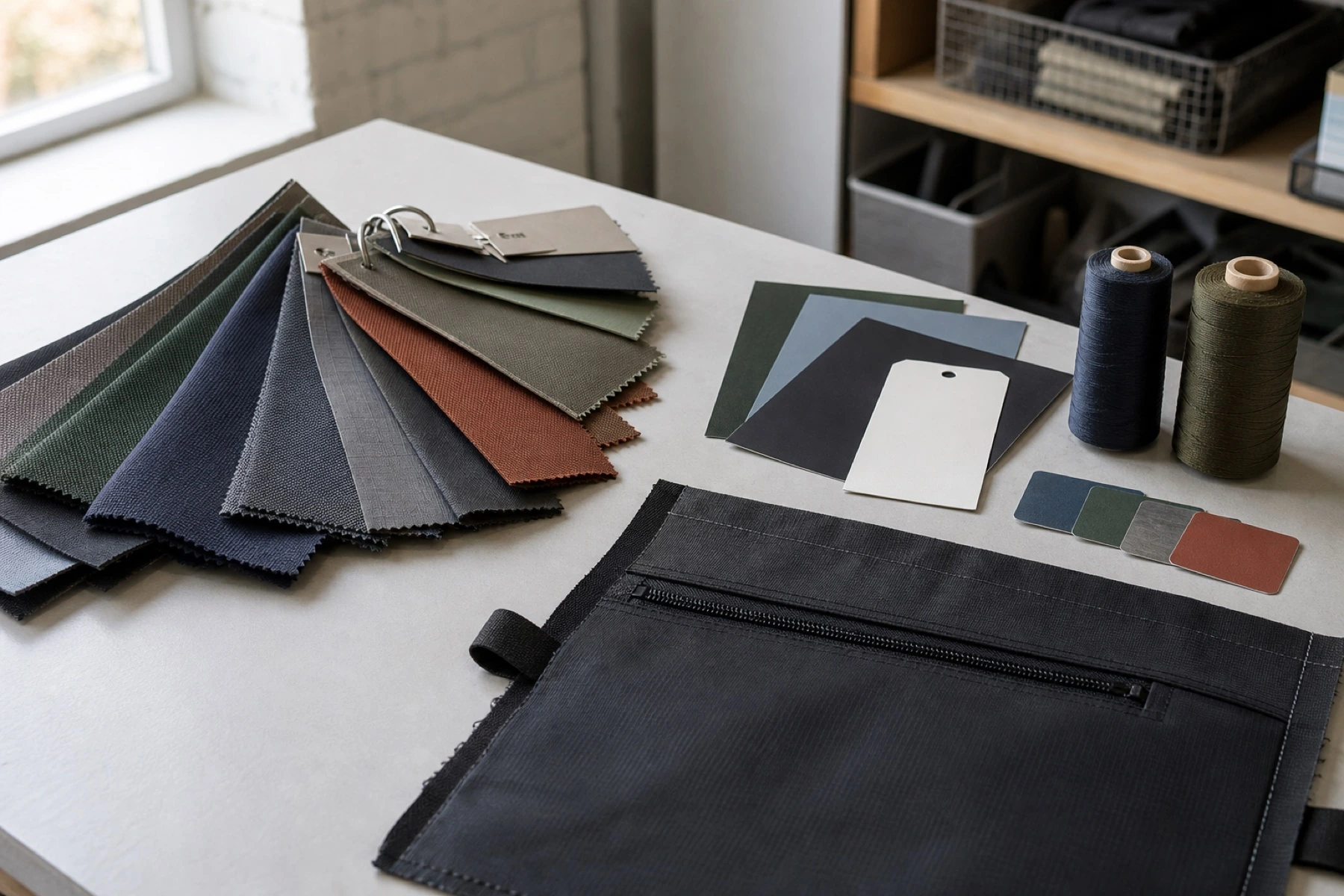
Two different material routes
Material choice is often presented as a question of appearance: which colour, texture, or finish best represents the brand? For a small-batch custom bag, it is also a production decision.
A stock material already exists in a supplier's available range. A custom material may require a special colour, print, coating, weave, backing, or other supplier process. Both routes can work, but they carry different minimums, timing, and cost.
For a first collection, the best material is not only the one that looks right. It also has to be available in a quantity the project can realistically use.
When stock materials make sense
Stock materials are often the more practical starting point for a first sample or smaller production run. They can reduce the need to commit to a large fabric quantity before the product has been tested.
- Lower material commitment: the supplier has already produced the fabric.
- Faster preparation: there is no separate colour or material development stage.
- More realistic for small batches: the bag order is less likely to be controlled by a separate mill minimum.
- Easier early validation: the brand can test structure and customer response before investing in deeper customisation.
The trade-off is that the brand chooses from available colours, finishes, and specifications. Stock can also change, so availability must be checked for the actual project timing.
What custom materials change
Custom development becomes relevant when a specific material effect is central to the product or brand. That might include a proprietary colour, custom print, special hand-feel, unusual coating, or certified recycled option.
The decision may introduce a separate material MOQ, development fee, colour approval, longer lead time, and unused material risk. A custom colour can look simple on screen while requiring a larger fabric order than the planned bag quantity consumes.
Claims about recycled content also require appropriate documentation. The Textile Exchange RCS and GRS standards explain the chain-of-custody frameworks commonly referenced for recycled materials.
How to choose for a first run
Start with the product's commercial priority. Is the first run meant to validate demand, prove a signature design, meet a retailer requirement, or reproduce an established bestseller?
For many emerging brands, using a close stock option for the first sample or first production run keeps the project moving while the structure, price, and market response are still being tested. A more customised material can be considered later when volume and demand are clearer.
This is not a rule that stock is always better. It is a way to avoid making every variable custom at the same time.
What still needs factory confirmation
Photos and swatches can indicate direction, but exact availability, usable width, backing, colour, supplier MOQ, and price need current confirmation. The answer may also depend on the bag's structure and projected consumption.
For a broader overview of how outer fabric, lining, reinforcement, zippers, and hardware work together, read the Custom Bag Materials and Construction Guide.
Next step
When you send an inquiry, include the estimated quantity, colour direction, intended use, and whether a custom material is essential or simply preferred. That gives the first review a practical commercial frame.
The next step is not to promise a fabric from a picture. It is to determine which route should be checked during paid sampling.