
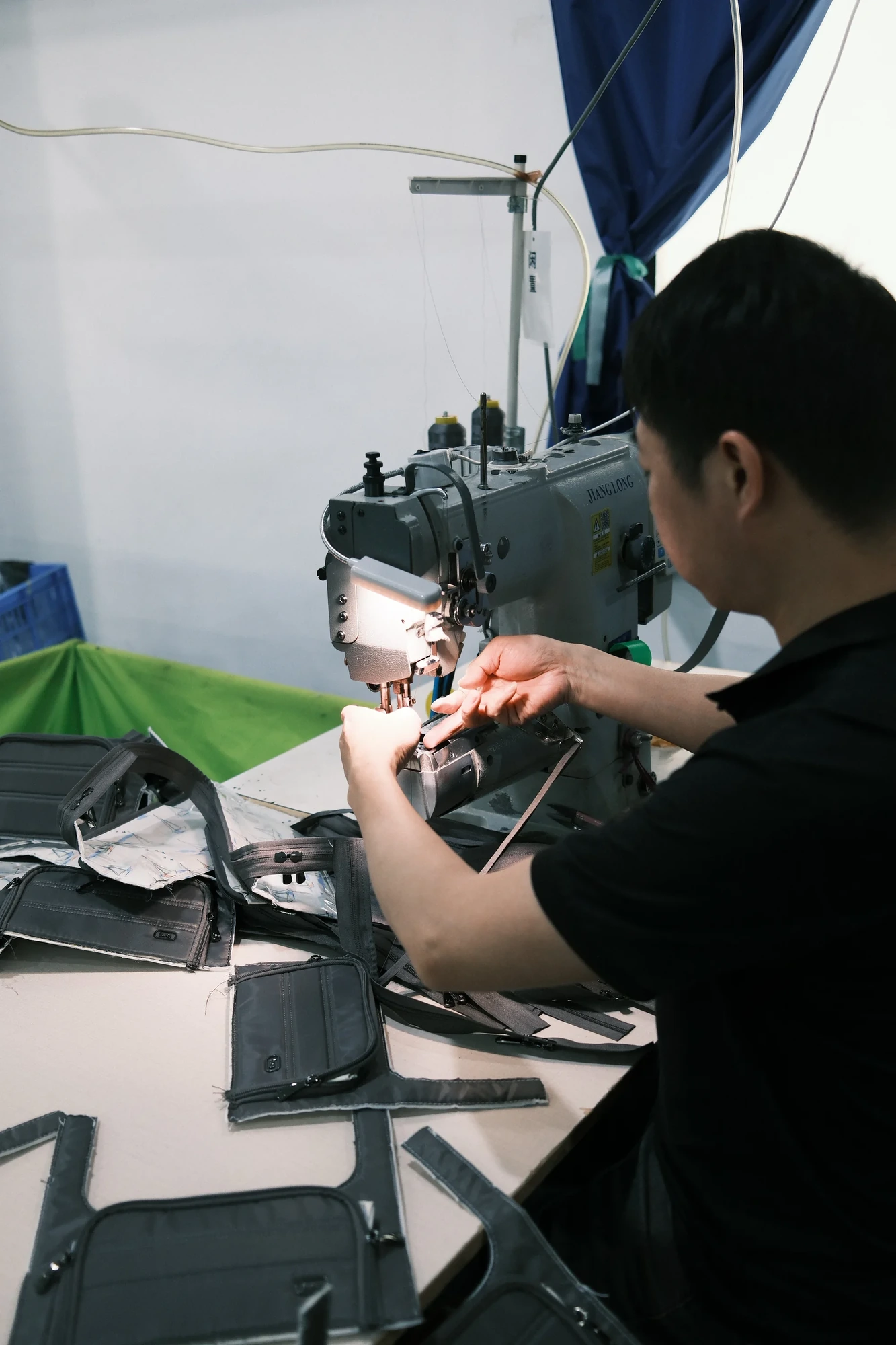
Why the brief matters
A custom bag sample is only as clear as the information behind it. If the brief is too vague, the sample room has to guess. Sometimes the guess looks reasonable; sometimes it is completely different from what the founder imagined.
This is why a good manufacturer does not rush from "send me a photo" to "we can make it". The first job is to understand the product: what it carries, how it opens, where it will be used, what it should cost, and what cannot change.
A clear brief does not remove creativity. It removes expensive guessing.
The minimum useful brief
You do not need a perfect tech pack to begin. You do need enough detail for a feasibility review. The minimum useful brief for custom bag sampling includes:
- Product type: tote, backpack, sling, duffel, pouch, passport bag, gym bag, dog-walking crossbody, or another format.
- Target user: who carries it and in what situation.
- Main function: what problem the bag solves.
- What it must fit: laptop, bottle, tools, clothing, documents, passports, cosmetics, camera gear, or daily carry.
- Reference images: existing bags, sketches, AI images, or moodboard details.
- Rough dimensions: height, width, depth, and important pocket sizes if known.
- Material direction: nylon, polyester, canvas, PU, recycled, waterproof, soft-touch, structured, or "please advise".
How rough dimensions should work
Rough dimensions are welcome. Completely undefined dimensions are risky. If a customer says "make it compact" or "not too big", the factory cannot know what that means. A compact passport bag for 70 passports is very different from a compact phone pouch.
When exact measurements are not ready, give a range and a capacity target:
- "It should fit a 14-inch laptop, charger, notebook, and bottle."
- "It should hold 70 passports, basic paperwork, a pen, and a small stamp pocket."
- "The crossbody should sit close to the body and not exceed roughly 28 cm width."
- "The main compartment should fit gym shoes and a change of clothes."
This lets the sample team build around real use instead of personal interpretation.
How to use reference bags
A reference image is helpful only when you explain what to copy and what to ignore. Otherwise the manufacturer has to guess whether you mean the size, pocket position, fabric, strap style, silhouette, or general mood.
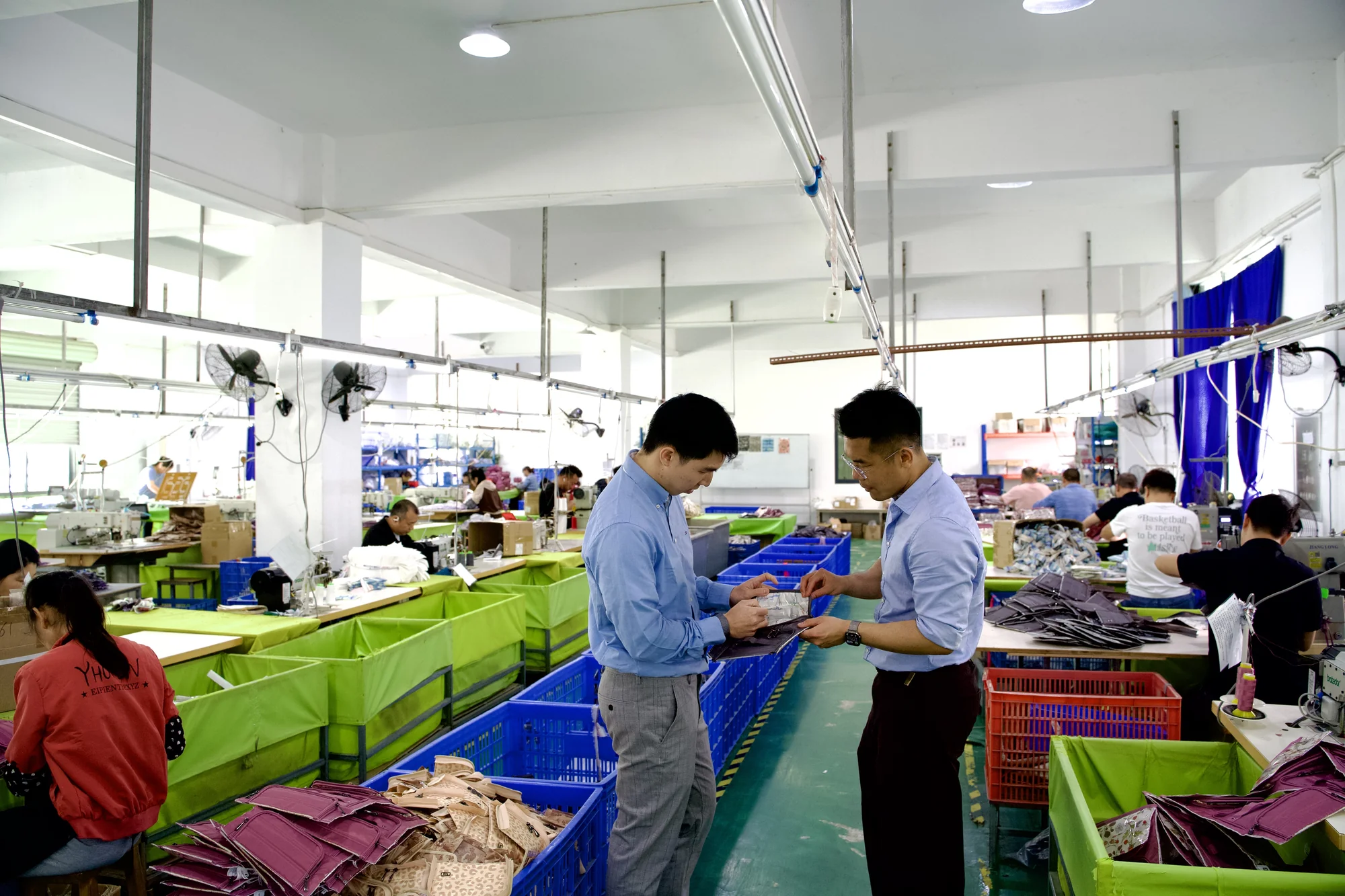
Budget, quantity, and timeline
Many founders hesitate to share budget or quantity because they worry it will weaken negotiation. In sampling, the opposite is usually true. Without a budget range, a development partner cannot know whether to recommend stock materials, custom hardware, waterproof zippers, molded parts, or a simpler first sample.
Share at least a range:
- Sample budget: what you are prepared to spend to test the idea.
- Production quantity: expected first run such as 100, 300, 500, or 1,000 units.
- Retail target: if you do not know factory cost, share the price you hope to sell at.
- Timing: sample deadline, launch date, event date, or delivery window.
If the bag will be sold in the EU, keep fibre composition and labelling in mind early. The Your Europe textile labelling guide explains why textile products need clear fibre information in the relevant market language.
Next step
If your idea is still early, send a simple brief instead of waiting months to make it perfect. The right first answer should not be a hard quote; it should be a feasibility review with clear questions.
For a faster reply, include your reference images, rough dimensions, intended use, material direction, target quantity, and timeline in one email or contact-form message.