
Start with the use case
Many first-time bag founders do not know the technical name of the material they need. That is not a problem. A clear description of how the bag will be used is often a better starting point than guessing a fabric name from a photograph.
Explain whether the product is for commuting, travel, outdoor use, cosmetics, tools, pet transport, sports, or daily fashion. State what it must carry, how often it will be used, and which conditions matter most.
You do not need to speak like a textile technician. You do need to explain what the product must do.
Describe behaviour, not a guessed fabric name
Useful material language can be simple and specific to the product experience:
- soft against the body or firm enough to hold its shape;
- lightweight for daily carry or stable under a heavier load;
- easy to wipe clean inside;
- some stretch for a bottle or accessory pocket;
- a matte, technical, natural, smooth, or textured appearance;
- protection from light rain rather than a broad promise of complete waterproofing.
For example, “an elastic side pocket that holds a bottle while walking” gives more useful direction than simply writing “mesh.” It explains the required behaviour without locking the project to a material that may not suit the construction.
Separate visual direction from performance
A material can look right and still behave incorrectly. A soft fabric may collapse when empty. A stiff material may make a small opening difficult to use. A coating may change hand-feel, sewing behaviour, or cost.
Mark which requirements are visual preferences and which are functional necessities. This helps the sample process prioritise the decisions that affect whether the bag works.
Avoid turning every preference into an absolute requirement at the beginning. Some qualities only become clear when material, structure, and sample construction are reviewed together.
Use references without treating them as specifications
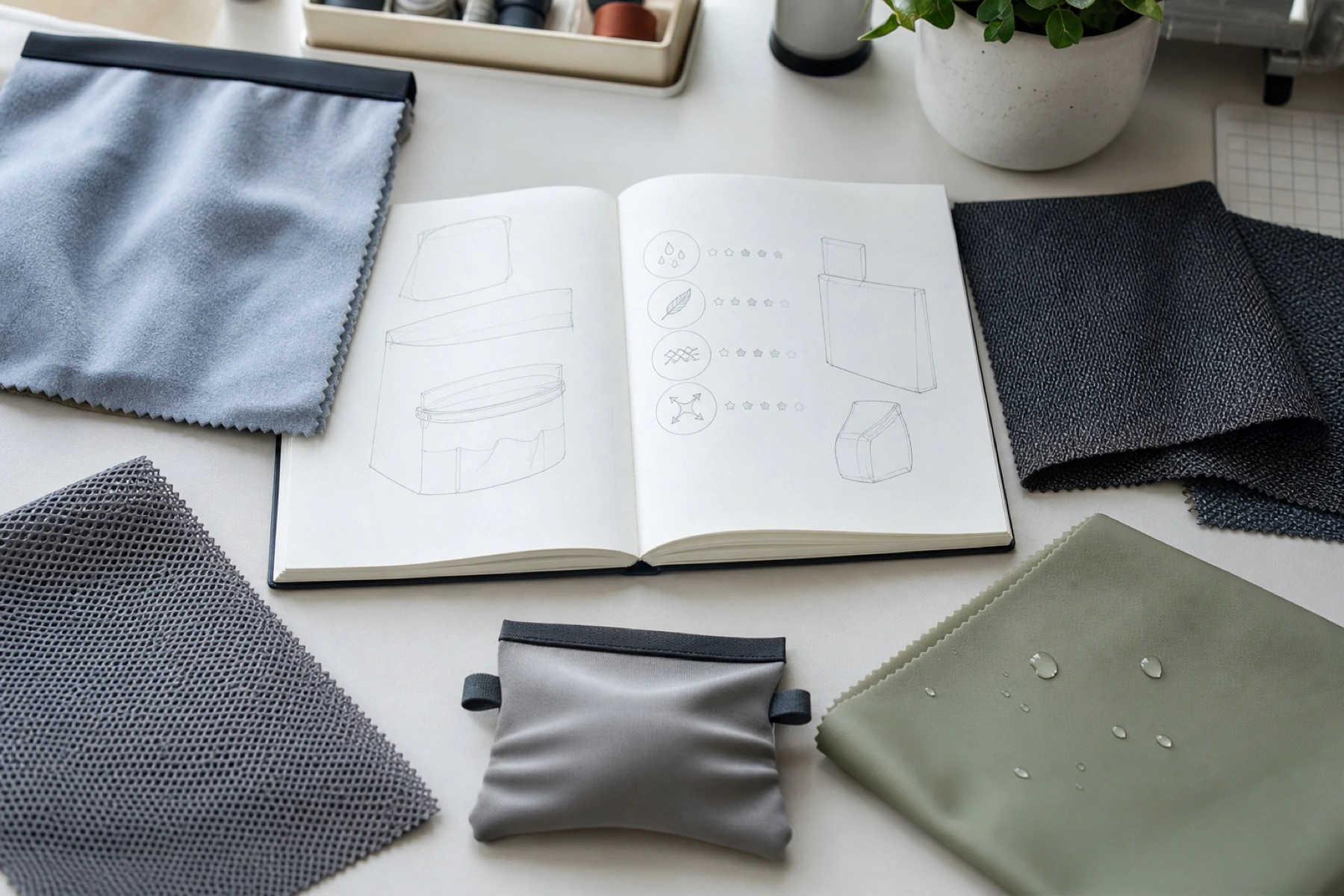
Reference bags, material swatches, product photographs, and AI renderings can all communicate direction. They do not automatically reveal composition, thickness, backing, reinforcement, dimensions, or supplier availability.
If you have a physical product, explain exactly which feature you want to reference: the outer hand-feel, pocket stretch, lining, colour, structure, or finish. If you only have an AI image, expect practical adjustments and consider a structure sample first when size and construction are still uncertain.
When the exact material is confirmed
The early review checks whether the use case, approximate dimensions, functions, quantity, and visual direction are clear enough to proceed. It does not guarantee that a photographed or imagined material is available.
Specific factory questions, available options, and the relationship between material and construction are handled during the confirmed paid sample stage. Final selection is made with the client after the relevant options are understood.
This staged process is more reliable than naming a material too early and treating that guess as a production commitment.
A concise material brief
A useful inquiry can be short. Include the product type, use case, approximate size, expected load, desired feel, visual direction, must-have functions, estimated quantity, and your clearest references.
ProtoBag Studio can then review whether the direction is ready for paid sampling. You keep control of the brand and product intention; we coordinate the production-side questions when the project reaches the appropriate stage.