
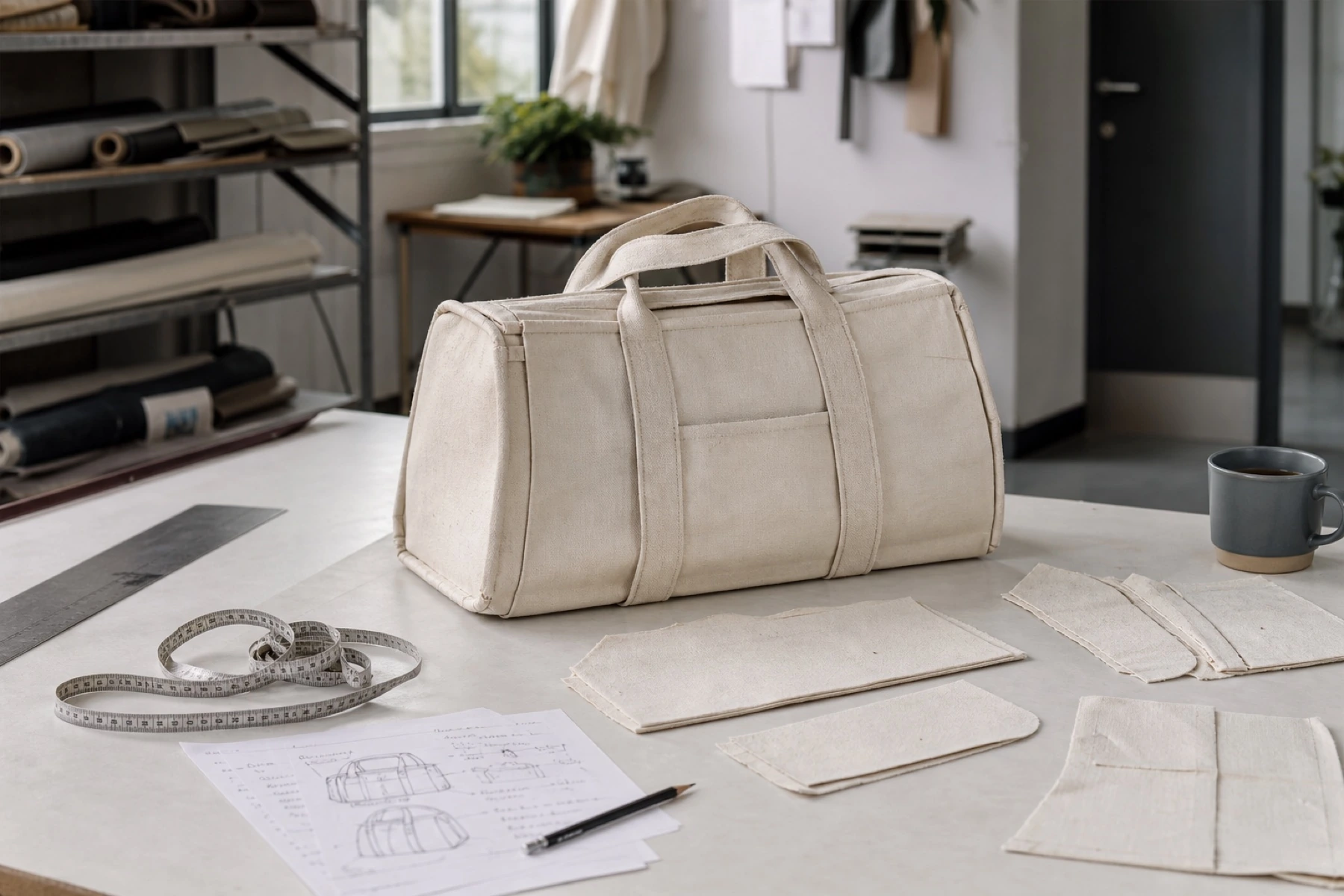
Why a custom sample has its own cost
When a bag exists only as a sketch, reference image, or AI rendering, it may look finished while many production decisions are still open. Dimensions, opening method, internal layout, carrying comfort, reinforcement, material use, hardware, and sewing order all affect how the physical product works.
A custom bag sample is therefore not simply one expensive unit from a future order. It is a development stage that turns visual direction into a physical object the brand and factory can review.
The sample fee pays for development work and uncertainty reduction, not only for one finished-looking bag.
What the sample fee covers
The exact scope depends on the project, but a paid sample commonly includes preparation and coordination before sewing starts, followed by pattern work, material preparation, assembly, and review.
- Project information review: checking the files, intended use, approximate dimensions, quantity, and open questions.
- Sample-stage planning: deciding whether the first version should test structure, material direction, or a more complete product.
- Pattern and construction work: converting the available information into parts that can be cut and assembled.
- Material and component preparation: using suitable available options for the agreed sample purpose.
- Production-side follow-up: organising factory questions, progress, photos, and the points that need confirmation.
Unusual construction, custom hardware, special materials, printing, moulds, or repeated revisions can create additional cost. These items should be confirmed as part of the paid scope rather than assumed from a rendering.
AI rendering only? Start with a structure sample
If a project has an AI rendering but no physical reference sample, we generally recommend treating the first version as a structure sample. AI images can communicate style, but they often hide or invent the way panels connect, how an opening works, how much the bag holds, or how a strap carries weight.
A structure sample focuses first on questions such as overall size, proportion, capacity, opening access, compartment layout, strap position, and basic construction logic. Its purpose is to find out whether the product works in three dimensions before the project spends more on final colours, trims, or premium finishes.
This staged approach gives each sample round a clear job. It also prevents a visually polished first sample from hiding a basic functional problem. For more context, see Can You Make a Custom Bag from an AI Image? and Why the First Bag Sample Is Not the Final Product.
Why the final unit price comes later
A preliminary range may help a brand judge whether a project is broadly realistic. A reliable production unit price, however, normally requires clearer information than an early image can provide.
The final construction determines material consumption, sewing time, reinforcement, hardware, finishing, packaging, and the amount of handling involved. Quantity and colour split also matter. If the sample changes, those cost inputs may change with it.
This is why a quick price based only on a rendering can be misleading. The more useful sequence is to confirm the physical direction, then calculate production around the approved specification and order quantity.
What to prepare before sampling
You do not need a perfect tech pack to request a first review. Clear, consistent information is more useful than a large folder of references that contradict one another.
- the intended use and what the bag must carry;
- approximate or confirmed dimensions;
- one primary visual direction;
- must-have functions and opening methods;
- an estimated production quantity;
- an existing product or physical reference, if available.
If only AI images are available, mark which view is the main reference and explain anything the image does not show. The first review can then identify what still needs clarification before the paid sample begins.
A practical next step
Send the clearest material you currently have. ProtoBag Studio will first review whether the project is ready for paid sampling and which sample stage is most practical.
Detailed factory feedback, material availability, and construction decisions are confirmed during the agreed paid sample process. That keeps the early conversation useful without pretending every answer is already known.