
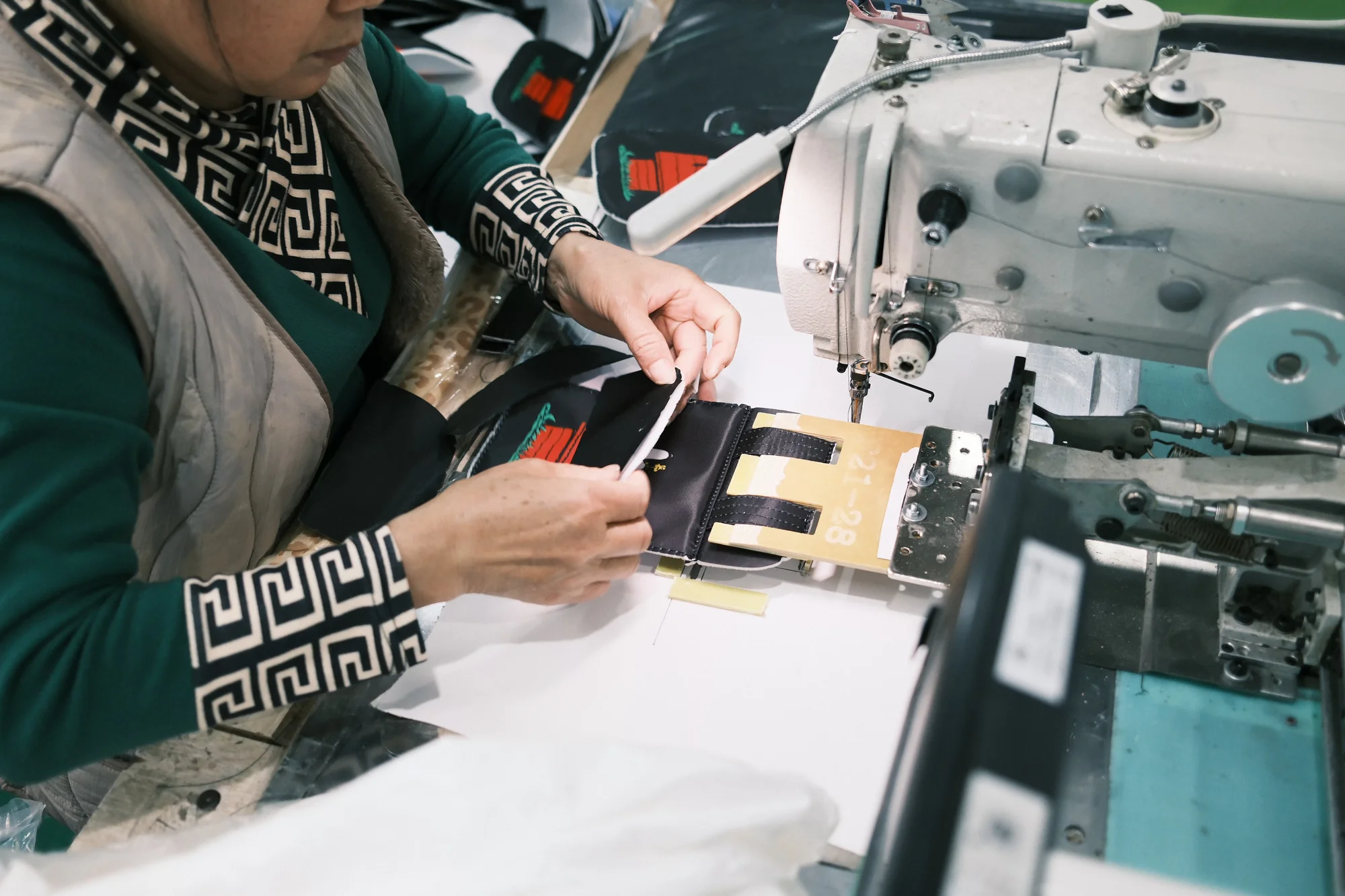
Why the first sample exists
The first custom bag sample is not meant to prove that every detail is perfect. It is meant to reveal what works physically and what needs adjustment before production money is at risk.
This is especially true when the project starts from sketches, AI images, reference bags, or rough dimensions. Until the idea becomes a physical object, nobody can fully judge proportion, capacity, comfort, opening access, material behavior, or construction cost.
A first sample is a learning tool. Treating it as the final product creates the wrong expectations.
The four sample stages
Not every project needs every stage, but most serious custom bag projects move through some version of this path:
- Paper mock-up: a low-cost way to check rough size, proportion, and compartment logic before fabric is cut.
- Structure sample: a sample focused on shape, pocket placement, access, and function. It may use substitute fabric or hardware.
- Material sample: a closer version using selected fabric, lining, zipper, hardware, and finishing.
- Pre-production sample: the approved reference for batch production, used to check consistency and quality.
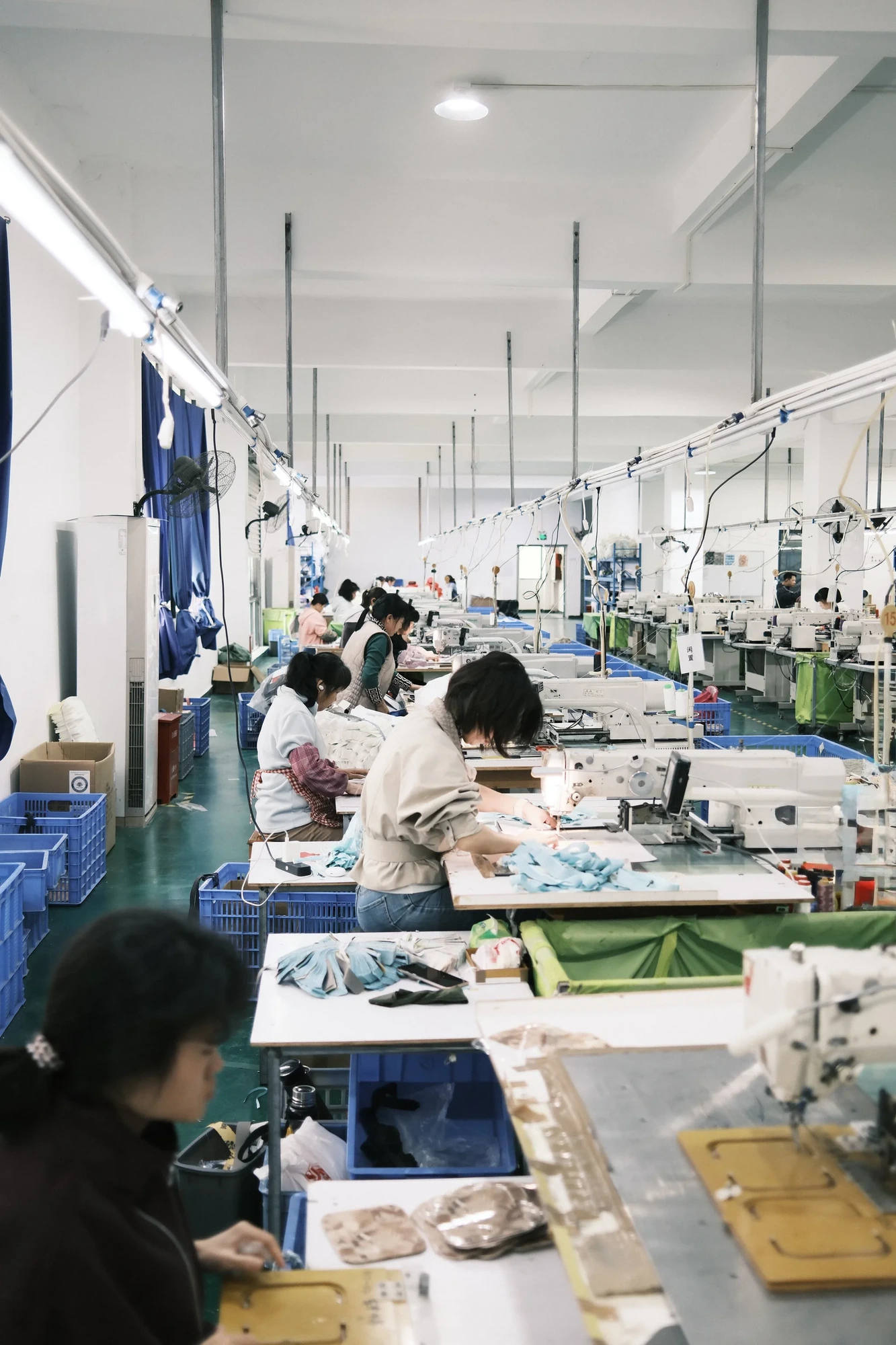
What to review first
Founders often start by judging color, logo, or small finishing details. Those matter later. On the first sample, review structure first.
- Does the size match the use case?
- Can the user access the main compartment easily?
- Does the bag carry weight comfortably?
- Are the pockets in the right places?
- Does the structure hold the intended shape?
- Does the waterproof or protective requirement still look realistic?
What not to expect
Do not expect the first sample to solve every unknown if the input was still unclear. A sample room cannot read taste, hidden dimensions, or unspoken functional requirements.
Common first-sample mismatches happen when the brief did not define:
- Exact capacity or item list.
- Desired stiffness or softness.
- Interior pocket logic.
- Waterproof level versus water-resistant level.
- What parts of a reference image were essential.
- Target production cost.
For projects where water protection is central, be precise about the test expectation. For fabric-level water penetration, ISO 811 defines a hydrostatic pressure method; for zippers, even water-repellent options such as YKK AquaGuard still need the full bag construction to be designed correctly.
How to avoid wasted sample rounds
The best way to reduce revisions is not to demand a perfect first sample. It is to run the right review before the sample starts.
- Review the brief first. Confirm what the bag must carry and how it should be used.
- Choose the right sample stage. Do not use final materials if structure is still uncertain.
- Comment in writing. Use photos, arrows, and numbered notes after each sample review.
- Separate preference from function. "I prefer it softer" is different from "the strap hurts with 5 kg load".
Next step
If your project is still early, ask for the right first sample, not the most finished-looking one. A structure-first sample can save money when the main unknown is size, opening, capacity, or carrying comfort.
ProtoBag Studio helps founders decide which sampling stage fits before the China-side sample room starts cutting materials.